Supermarket blog
Fabricerat, fake, verklighet, sanning..
Virginia Woolfs verklighet; när det lokala blir globalt.
Text av Anna Ekros
Fabricerat, fake, verklighet, sanning, vad är dessa begrepp vi slänger oss med och vilken värdering lägger vi i dem? Själv misstar jag orden rätt och bra för sant och verkligt gång på gång. Samtidigt vet jag med mig att jag om livet inget visste utan uppdiktad och fabricerad fiktion. Så många livsöden jag läst mig till att förstå, så många känslor jag aldrig haft som blivit mina på museer, gallerier och konsthallar, så många textrader till gitarrplink och elektroniskt surr som förkroppsligat det främmande som jag kunnat göra till mitt. En avatar av det lokala som genom konsten blir globalt och möjliggör empati och tacksamhet. Hur kan då fake och fiktion vara negativt? För att förstå vad som för mig är fabricerat behöver jag kanske förstå vad jag menar med begreppet verklighet.
Jag läser en artikel i DN en morgon i juli. Under våren 2020 har Virginia Woolfs essä Ett eget rum känts mer aktuell än på länge, skriver Sandra Stiskalo (18/7 2020). Stiskalos text består dels av ett innehållsreferat, att essän handlar om vad en kvinna behöver för materiella medel för att kunna skriva romaner, och dels av en intervju med poeten Jenny Tundal. Tundal lyfter fram tanken att det egna rummet i essäns titel kan tolkas som en sinnesstämning av koncentrerat betraktande som inte blir sönderdelat av omständigheter utanför jaget. Stiskalo tar sedan en vändning i sin text, där hon säger sig se en självmotsägelse i Ett eget rum. Journalisten avslutar därmed med en tes om Woolfs omfamning av påminnelser om verklighetens existens i detta egna rum av försjunkenhet och koncentration. Jag märker att jag upplever Stiskalos vändning till distraktionens fördel som ett försök till tröst på bekostnad av Woolfs kontinuerligt föränderliga konceptualisering av begreppet verklighet. Men tröst för vem? För den skribent vars verklighet är att hon arbetat hemifrån under pandemin? Vad var verkligheten för Woolf? Vad är den för Stiskalo? Och vad är verkligheten för dig och mig?
Jag drar mig till minnes tankar från en tids studerande av Woolfs romaner och essäer då The Cambridge Companion var mig ett verkligt sällskap. Jag försökte febrilt att förstå kopplingen mellan Woolfs sätt att skriva och modernt måleri. I citatet från Ett eget rum som innehåller ordet verkligheten och som avslutar Stiskalos text, i ljuset av den inre monologen hos karaktären och målaren Lily Briscoe, tror jag mig skönja att verklighet för Woolf var vad hon kunde se med blotta ögat. Solkatter och speglingar i fönsterrutor som flyter in i de objekt vi förstår som närvarande i vårt synfält i materiell form, blommor som färgfläckar snarare än namngivna och inplacerade i färdiga koncept i en given ordning efter Systema Naturae. Här, finner jag mig tänka, är vi så långt ifrån common sense och konspirationsteorier vi kan komma.
Sinnets fabricerade sida, vågar jag hävda, var för Woolf å andra sidan konventionen, den brittiska överklassens hierarki, damernas imaginära, men på ett kollektivt och socialt plan högst reella, behov av vacker dukning och tvångsmässig artighet. Denna fiktion, ett fabricerat nät av indelning och konceptuell förståelse av varje företeelse — såsom blommans mättade färgfläck bar ett namn och en prislapp — såg för Woolf ut att dölja den verklighet som ett betraktande öga skulle kunna åtnjuta. Där låg en tunn, av sinnet fabricerad, slöja över ögonen. Woolf slogs med språket för att det skulle passa erfarenheten och subjektet för att denne skulle ställa sig sekundär objektet, på samma sätt som konstnärer och musiker från Cezanne till Cage till Tillmans vänder sitt givna medium ut och in. Allt för att det lokala, den egna erfarenheten av samtiden, ska bli global, något som en annan människa genom konsten kan tillgodogöra sig, utan att uppdiktade premisser för mediet ska stå i vägen för uttrycket. Perception is expression, sa en professor på ett filosofiseminarium en gång för länge sedan, och jag skrev ner tanken i marginalen. Verkligheten för Woolf är i så fall inte, som Stiskalo föreslår, en distraktion som bör omfamnas, utan en grundbult i en skapande människas liv. Inte som i att hon ständigt ska bli störd av den, men som i att hon ska kunna välja själv när och hur hon ska observera den. Och den observationen är i sig en form av uttryck. Ett uttryck som inger en subjektiv chans till frihet av sällan skådat slag.
Åh men buu vilken förlegad modernistisk insikt, kom igen! Well, må hända. Till viss del behöver vi konvention och koncept för att delta i ett samhälle. Vi behöver namnge och kategorisera saker, ta vissa ordningar för sanna för att klara oss i världen. Det är okej att skriva en roman som går att läsa och måla något som är en smula föreställande. Men när går vi för långt? När bostadsrättspriser är det enda samtalsämnet på födelsedagsfesten, barnens framgång på familjefikat och antalet nollor på stegräknaren på lunchrasten? När konsten är en siffra, ett plakat eller en karriär? När vi injicerar desinfektionsmedel och oroar oss för nazister på månen? När spridningen av Covid-19 är en judisk komplott, en muslimsk konspiration eller ett amerikanskt biologiskt vapen? När blir kategoriseringen ett ok snarare än ett hjälpmedel? Kanske kan det finnas en sanning i en förlegad rörelse, som, för att stjäla en metafor från Walter Benjamin, likt murgröna klättrar på en ruin.
Sanningen i sig, den som då skulle framkallas i ens egna ögon, bortom Woolfs slöja, är dock problematisk som moralisk måttstock. Att som jag blanda ihop ordet rätt och sant är farligt, för det finns människor som försöker ta sanningen i sina händer och slå fast den. I en tid då vi lockas av idel sanningssägare kan bara den som pekar mot en sanning som är i ständigt återuppfinnande av sig själv vara värd att lyssna på. Sanningen är nämligen beroende av nuet. Behovet av att låsa fast sig vid förhastade slutsatser för att förbise komplexitet är vår tillvaros obehagligaste tendens. Den snabba sanningen är de falska nyheterna.
Jag ramlar över Filosofiska Rummet i P1, avsnittet Romanen som filosofiskt redskap (24/5 2020) när jag scrollar runt i poddjungeln. Författaren och matematikern Helena Granström refererar till Schopenhauer då hon lägger ut tesen att romanen kan närma sig en filosofisk idé på ett mer omedelbart sätt än den akademiskt skrivna texten. Dock inte som idén i illustrerad version utan som i att författaren har använt romanformen för att själv förstå något för denne obegripligt och att verket därför inte går att summera till en sanning utan att där finns en uppsjö av möjliga sanningar intill outtömlighet. Om vi antar att Helena Granströms tes håller är det den märkliga mänskliga företeelsen konst som har potentialen att tillåta en tillräcklig grad av komplexitet för att presentera en filosofisk idé i sin helhet. Kanske är det alltså bara i konsten som vi på riktigt kan möta de filosofiska frågorna. Dessa som vi så väl behöver i en tid av flertalet för vår civilisation omvälvande fenomen på vår jord.
“The imagination loses vitality when it ceases to adhere to what is real” skriver Wallace Stevens i The Necessary Angel: Essays on Reality and the Imagination från 1951. Hur ska vi, om detta påstående stämmer, kunna låta oss gå in i fiktionen, där de filosofiska frågorna finns att brottas med, om vi redan låst oss vid snabba och därmed verklighetsfrånvända sanningar om hur vi ska leva våra liv? Hur ska vi kunna se vad våra ögon framkallar om vår förklaringsmodell är för snäv?
Fabricerat, fake, verklighet, sanning, för att förstå vad som är fiktion behöver vi se vad som för oss är verkligt. Där och då kan vi på riktigt börja berätta vad vi ser. Kanske ska vi varken fördöma sanningen eller lögnen, föredra verklighet framför det fabricerade eller tvärt om, kanske ska vi helt sluta använda koncepten som vansklig moralisk kompass, utan istället nöja oss med att öva oss på att se deras skillnad och betydelse? Vad betyder sanning för sanningssägaren och vems verklighet befinner vi oss i just för tillfället? Ser Woolf världen från samma vinkel som jag och betyder hennes ord samma som mina? När har sanningen stagnerat till en lögn? Och när innehåller fiktionen en sanning? Vad är det egentligen som jag ser?
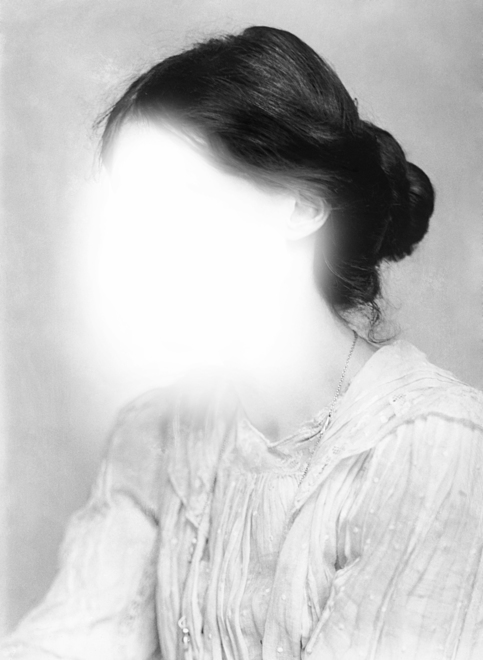
SUPERLOCAL 2020

SUPERLOCAL 2020 – Stockholm Independent Art Fair will be held on 3–6 September 2020.
It is a collaboration with artist-run initiatives around Stockholm, who exhibit in their own venues around the city.
Satellite galleries in 2020 are:
AllArtNowLab, Älvkarleövägen 6, Hjorthagen
Galleri Toll, Inside the Ropsten metro station (exit Hjorthagen)
Detroit Stockholm, Roslagsgatan 21, Stockholm
Konstnärshuset, Smålandsgatan 7, Stockholm
Grafiska Sällskapet, Hornsgatan 6, Stockholm
Hjorten, @ CRUM Heaven, Högbergsgatan 38, Stockholm
Flat Octopus @ SBG18, Swedenborgsgatan 18, Stockholm
ID:I Galleri, Tjärhovsgatan 19, Stockholm
Studio44, Tjärhovsgatan 44, Stockholm
Tegen2, Bjurholmsgatan 7A, Stockholm
Candyland, Gotlandsgatan 76, Stockholm
Galleri Nos, Kaggeholmsvägen 39, Tallkrogen
Galleri Nef, Rusthållarvägen 95, Bagarmossen
Juxtapose Art Fair

Interview with Juxtapose Art Fair
Juxtapose Art Fair is the latest addition to the small range of art fairs focusing on non-commercial artist-run initiatives. Its first edition will take place on 4–6 June 2021 in Aarhus, Denmark.
Supermarket asked the three founders and directors of Juxtapose Art Fair, Pamela Grombacher, Sasha Rose Richter and Jacob Juhl, about their motivation for setting up a new art fair for artist-run spaces, what can we expect from the first year of the fair and their future vision of the fair. We also discussed the recently launched open call for participants.
You can read more about the application to Juxtapose Art Fair here (deadline 1st September 2020).
Who are you and how did you form the founding team behind Juxtapose Art Fair?
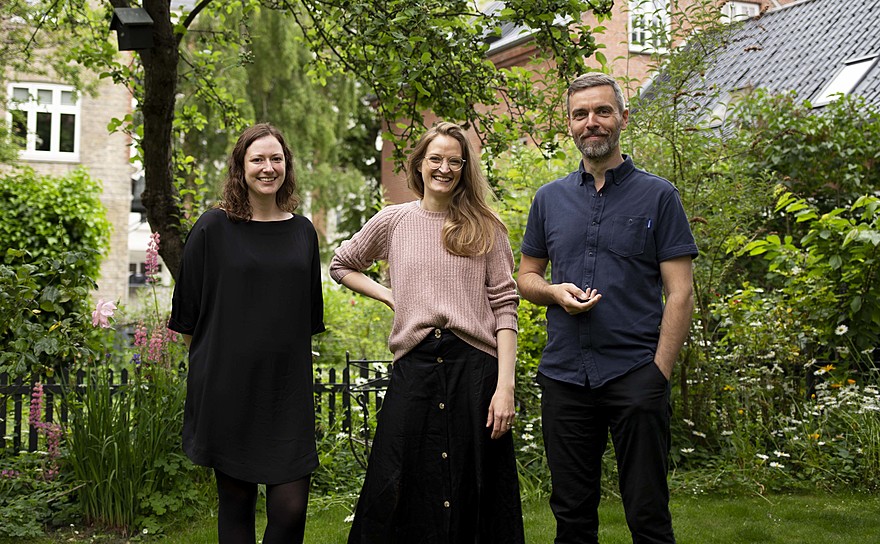
The Juxtapose board is Pamela Grombacher, Canadian curator, Sasha Rose Richter, Danish curator and Jacob Juhl, Danish artist. In early 2018 Jacob and an artist colleague, Lars Bang, started talking about organising an independent art fair in Denmark. However, neither of them felt they had the experience or the time to do it on their own, so Jacob started asking around in Aarhus for partners with more organisational skill and experience. Sasha showed a keen interest right off the bat, and as she had been working with Pam on a number of projects she suggested that Pam be a part of the board as well.
Why did you feel the need to start a new art fair for artist-run spaces?
There is so much happening in the independent art spaces right now and the scene is really booming! There is a lot of fresh energy and willingness to try out new and daring formats that you just don’t see in museums or established galleries. But most of these initiatives are still a well-kept secret to most people – the audience is mainly other artists and curators. We feel that the independent platforms deserve a much wider reach and hope that we can contribute to that by presenting some of them in a popular public space that is visited by people from all walks of life.
What can we expect from the first year of Juxtapose Art Fair, and what do you hope to achieve on a longer horizon?
We are launching the first edition of Juxtapose Art Fair on 4-6 June 2021. We’ll kick off with an opening party on Friday night, followed by a diverse program of activities over the weekend. The fair will unfold throughout Godsbanen, which is an old freight train station that now serves as a cultural center in central Aarhus.
The fair’s main exhibition will take place in Godsbanen’s Rå Hal (“raw hall”) – a huge space that combines modern and historical architecture, with concrete floors and an arched wood ceiling. With our open call (deadline 1st September) we encourage artist-run initiatives to imagine how they could utilise this space in creative ways. Throughout the weekend exhibitors will each give a short talk to introduce their initiative, and in the evenings there will be a series of thematic panel discussions and debates.
In Godsbanen’s central foyer you will see a curated exhibition by artists who are members of AIM Network (Artist Initiative Meetings Network), which will focus on the artists behind the network’s various artist-run initiatives. We are also collaborating with Artist Run Network Europe (ARNE), a new project supported by Creative Europe, on a one-day conference that will take an in-depth look at some of the most pressing issues facing the artist-run sector today.
We are now fundraising for a visiting curator programme that aims to consider the role of curators in the artist-run sector, imagining different ways in which freelance and institutional curators can support artist-run initiatives. We have also invited local artist-run exhibition spaces to be affiliate partners, which visitors can check out through our guided walking tours around the city center.
We can’t wait to see what kinds of ideas and collaborations might grow out of the inaugural fair. Looking forward, our main priority is to learn from this experience and make sure that Juxtapose Art Fair has value and impact for the participating artists, and the larger artist-run sector.
Our plan is to continue as a biennial, following the first edition in June 2021. It is difficult to imagine what the world will look like in 2023 and beyond, especially given all the recent uncertainties surrounding the pandemic. Like everyone, we are thinking about issues related to travel, and especially its impact on creating a sustainable and inclusive fair – and that will definitely carry forward in our planning of future editions.
What is different about Juxtapose Art Fair in comparison to other artist-run art fairs?
We are in many ways inspired by Supermarket – how it showcases a wide variety of different artist-run projects, and creates opportunities for the participating artists to meet and learn from one another. We are so excited to work with AIM Network, which originated in Supermarket’s Meetings programme, and with Artist-Run Network Europe on Juxtapose’s conference and internal programming. This format is unique in Denmark, especially in the region (Jutland) where we are based.
Our focus is on highlighting the diversity of the artist-run sector. This is in part to create visibility around the sector, and in part to celebrate the artists who make up this sector. This is why we have chosen not to adopt a thematic framework for the fair – to allow more room for artist-run initiatives to showcase their unique profiles, without having to adhere to a specific curatorial theme.
You recently launched the open call for participation in the first year of Juxtapose Art Fair. Who can participate and what criteria and qualities are you looking for?
The call is open for artist-run initiatives, for example artist-run exhibition spaces, artist collectives, independent art publications, and online art forums. Our goal is to make the public here in Aarhus curious about the kinds of independent projects that operate outside of more familiar, institutional settings like museums and commercial galleries. Artists are invited to apply on behalf of an initiative they run, rather than on an individual basis.
Successful applicants will paint a clear picture about their initiative – what it is, why it was founded, how it operates, what projects are shown, etc. Through the open call we want to find out: What is your initiative’s profile? What is its focus? What is the ethos? What is the overarching goal?
Our goal is to select participants with very different profiles so that, when shown in juxtaposition to each other, the diversity of the sector is impossible to ignore.
NONSNS/With love from Russia
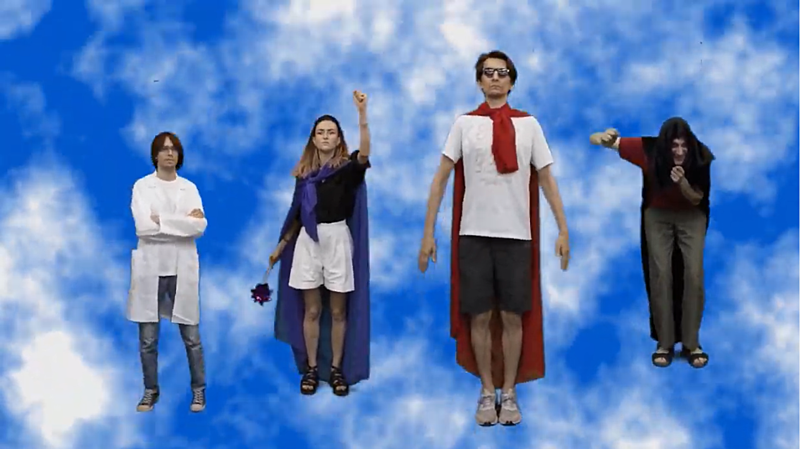
NONSNS (needed ordinary naive speculative new self-organisation) is an independent organisation of three artists: Ruslan Polanin, Masha Cheloyants and Gosha Golitsyn. The NONSNS art group is based in a studio on the territory of the former NIIDAR factory and represents the Moscow art underground as an artistic environment and a live process in which new ways of developing modern conceptual art are thought up and born.
Artists from NONSNS work with various mediums and reassemble their group identities by using of mass culture patterns but always finding ways for their activities outside the mainstream of the art industry. Their artworks which are often absurd and not always recognized as art usually are included into everyday life.

Official NONSNS TV channel:
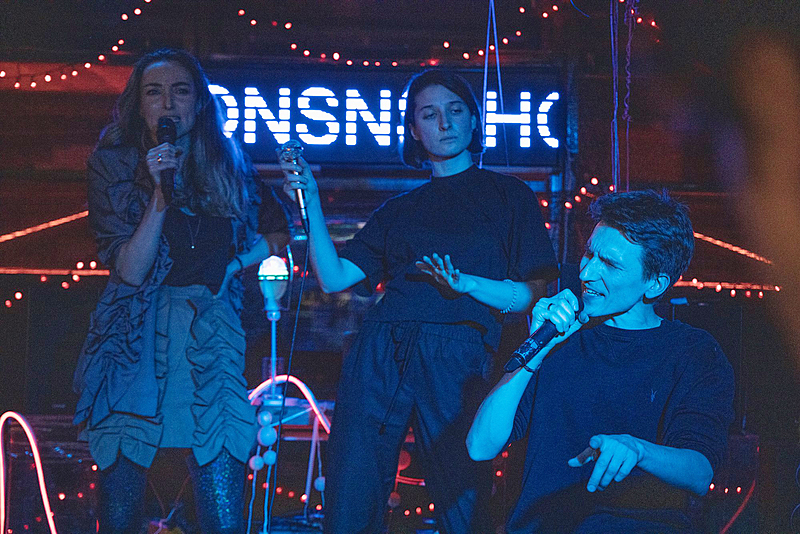
All images courtesy of NONSNS.
28.04.20 de Blog contribution Deborah R. Eisinger
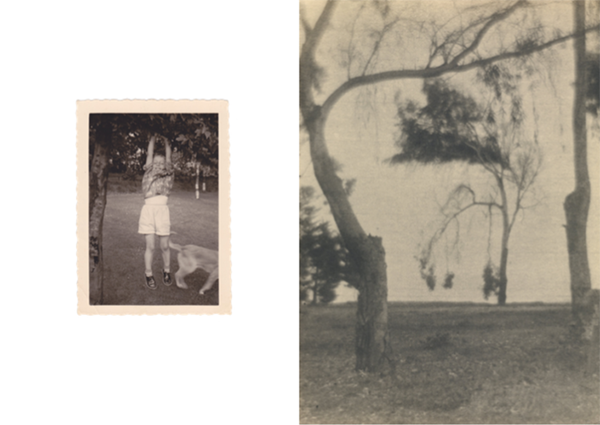
Deborah R. Eisinger, from the series 'cloud of witnesses 2014/15'
"Come forth, bloggers" From hesitance, found footage, and digging family archives (not only in quarantine)
Total estimated reading time: 20 minutes
So, how could one resist contributing to this blog, when you ‘re so kindly asked by the effortlessly hard-working team of SUPERMARKET? Exactly! You simply don’t.
At first I was hesitant (I don’t blog, vlog, you name it) and sometimes I tend to be shy about stuff that I ‘m doing and working on, but hey: Let’s give it a try (while I hope you’re being as patient as lenient), get a cup of coffee (or tea) for an estimated reading time of 20 minutes max, and have some virtual fika together –– it’s the final round of postponed (ex) SUPERMARKET ART FAIR WEEK! And in general, more time than ever, to show some love, to support each other and to engage in all ways legitimately possible.
Including a "word play", that I ‘m unable to discard at this very moment, and to emphasise this to begin with: Of all highly cherished supermarkets (and their tireless employees) running them) here in Northrhine-Westphalia – SUPERMARKET would be the only one, where I ‘d rather be right now to stand in line embracing the state of the art(s) with you!
Anyways... instead of gathering at Skrapan together this week – which would literally and quite practically have been a 'high-light' in itself – getting to know all of the exhibitors, artists, participants and learning from wonderful projects and each other, we have been tuning in from all over the globe through the web staring at screens with a thing some might call "(super) safe distance", because, well – we all had/have to learn it the hard way and already know it – a pandemic happened, with the end nowhere near in sight. No news! (Un)fair and surreal enough. Hang in there.
Although I’ve been following SUPERMARKET ART FAIR from Germany for a couple of years now, this year’s 2020 edition would have been my very first to join in. And after being selected as a PNP, my participation was/would/will generously be made possible through the funding of Tyska Ambassaden Stockholm. Which added to my original excitement to take part.
As a self-organised hybrid and (curating) cultural producer with a background in photography (BA) from Folkwang University of the Arts (Essen,Germany), a soft spot for cross-cultural, co-creating cooperations and plenty of (privileged) quarantine-time to run inwards now, I can devote myself to a personal project, that I kept close to heart and pretty private, too.
The initial momentum: For my BA-project "cloud of witnesses" (2014/15) I was working with photos of my beloved Dutch grandmother, who had passed away and to whom I had not been able to say goodbye forever. The only thing that was left besides memories and memoirs? A photo box, that she had been treasuring her whole lifetime.
To quickly come back to the future and to the point of this contribution... The loss of my grandmother and "cloud of witnesses" are not only accompanying me ever since, but moreover it marked off a starting point, that kept adding up to the realization:
Digging up one's own family archive – whether publicly processed through the arts or keeping it to yourself – is more common than I ever thought it would be.
Which again brought me to wanting to unfold and extend this very realisation. Through artistic research and by trying to understand other artists' approaches on family archives and vernacular photography.
Hence a final MA-research-project, that was/is in the making.
From Poland to Argentina and Indonesia, there is no day passing without coming across inspiring works and artists, that among others help (the way overdue) queering and de- colonizing of (family) histories and archives, may they be well-established/institutionalised or barely even known.
Thanks to the SUPERMARKET ART FAIR Team/Alice Máselníková, who had been asking for blog contributions, parts of my creative #quarantine research project-process in terms of "How to write an interview with a fellow artist overseas" has been speeded up a little to be aired and shared with you.
Starting off with artist Will Vickers, who is working with found photographs of his grandparents, and currently is based, where like so many of us, can't be right now to mingle in person: Södermalm.
Coming forth and almost to an end: You can find our digital conversation on life, death, family, found footage and how to try to make sense of it all, in written word and in its full bloom here.

Hope you like and enjoy the read, and that all of you and your loved ones are well and safe, wherever you are.
Love, Deborah
P.S.: In case, you're lucky enough to be around sunny Stockholm (and in health), you might consider wanting to say hi to Will and his partner Lilli from a safe distance? Also: if you know about a friend of a friend or you yourself might be working in the field of interest described or beyond – very much looking forward to get in touch :)